Sixteen blogs, eight countries, seven key themes and six impactful areas of work.
As 2025 draws to a close, we have reflected on what has been widely considered to be one of the most challenging years for many in global health. Yet, despite the difficulties, it has also been a year defined by resilience, creativity, and collective energy.
The talent, commitment, and passion we experienced throughout the year helped us sustain our momentum and optimism – reminding us of what is possible when we work together, both locally and on the global stage. Alongside valued colleagues, we were proud to contribute to a range of valuable products and to participate in solution-focused discussions at many international conferences.
Claire Kilpatrick and Julie Storr, Directors at S3 Global Health, highlight that it has truly been a privilege to collaborate with so many different talents on so many different projects. Partnership, trust, and shared ambition is very much appreciated and valued. We look forward to building on this work and continuing our collaborations in 2026.
Below is a summary of what we said and did over the course of 2025.
A year in 16 blogs – thematic insights for future thinking and action
Looking back at our 16 blogs, seven themes emerge that we think can be built upon in the coming years.
Theme 1: IPC is a foundational enabler of safe, quality, person-centred care
Infection prevention and control (IPC) needs to be reframed to go forward and survive, including through:
- A contract of safety with patients – a means of enabling care, not restricting it
- Being a core pillar of patient safety, quality improvement and health system performance
- Not being viewed as a “pandemic-only” function
- Not being a burden or compliance exercise
“IPC can’t continue as something that “sits in the corner” until there is a crisis.”
Theme 2: Humanity, dignity and compassion are not optional extras
Our blogs in 2025 have specifically focused on:
- Nursing and person-centred IPC
- Compassionate IPC during COVID-19
- Hygiene, dignity and respect
- Patient involvement
- Cleaners – the invisible workforce.
All of which asserts that:
- Clean care is moral care
- Loss of dignity is harm, just like an avoidable infection is
- IPC guidance that ignores lived experience can cause damage
- Compassion and safety are not trade-offs when IPC is well designed.
Theme 3: Behaviour change is the real work of IPC
We have repeatedly reinforced this message through talking about:
- Patient empowerment
- Language and framing
- Gaming and novel training tools
- Social science
- Critiques of “cargo cult” improvement approaches.
Our position is unambiguous:
- Guidelines do not change behaviour
- Posters do not change culture
- Audits without meaning do not improve care.
“We need to treat IPC as a hearts-and-minds endeavour.”
Theme 4: Language, narrative and communication shape outcomes
- How IPC is talked about determines whether it is valued
- Technical language can alienate IPC
- “Compliance” language can backfire
- Advocacy without strategy fails.
We want to consistently promote:
- Strategic campaigning
- Audience-specific narratives
- Professional communications expertise
- Dissemination as an ongoing process, not an afterthought.
We want to continue to be catalysts and translators between evidence and influence.
Theme 5: Systems thinking and integration over silos
Across water, sanitation, waste management and hygiene (WASH), antimicrobial resistance (AMR), cleaning, nursing, patient safety, the sustainable development goals (SDGs), etc – IPC services are vital. We argue that:
- Fragmentation is a major cause of failure
- IPC only works when embedded across systems
- Clean care requires alignment between policy, infrastructure, workforce, culture and leadership.
So in 2026, let’s see more:
- IPC–WASH–AMR convergence, for example
- Environmental cleaning as a key part of health system strengthening
- National action plans with integrated implementation logic, not just existence.
Theme 6: Elevating the invisible and undervalued
We promote a powerful moral and practical thread through our words including:
- Cleaners as lifesavers
- Patients as partners
- Frontline workers as experts in context and nurses in particular as central to person-centred IPC.
Overall, this signals greater:
- Equity awareness
- Respect for lived experience
- A rejection of hierarchy-driven improvement.
Theme 7: Leadership, culture and values determine success
The argument is crystallised for us all:
- Collaboration and co-creation means a future-facing position with clarity; IPC by 2030 must be human, relational and adaptive because technical excellence alone is insufficient.
“The difference between competent IPC and exceptional IPC is leadership, culture and values.”

A year in six areas of work and commitment
In 2025 we worked as consultants and contributors to a range of agencies. We are proud of the reach, depth and diversity of our outputs and collaborations. Below are some examples of our work. They reflect long-standing partnerships, trusted technical expertise and a commitment to work that is evidence-based, people-centred and designed for sustainability.
Because we believe in:
- making a clear, consistent argument for IPC as a human, ethical, system-wide discipline that enables safe, dignified, high-quality care
- highlighting that its success depends as much on leadership, culture, communication and behaviour as on guidelines, evidence-based interventions or infrastructure
- building on our history, practice, policy insights, research, communications, training, and lived experience across low-resource and high-resource settings alike.
1. Global policy, strategy and system strengthening
We were leaders on a number of resources and academic publications that are shaping the enabling environment for IPC at scale:
World Health Organisation (WHO)
– Development and implementation of national action plans for IPC: practical guide
– Identification of indicators and targets for the new global IPC framework (e-Delphi)
– Global Research Agenda for Hand Hygiene Improvement (Delphi consensus)
– Quality Technical Expert Network (QTEN) coordination.
Prof Joe Solomkin Memorial Lecture at Surgical Infection Society Europe conference, Shaping the future through a WHO global strategy, action plan and monitoring framework on IPC.
Health Security Partners / United States of America Centers for Disease Control and Epidemiology,
Draft ASEAN country package to assess and improve hospital hygiene.
Infection Prevention Society, UK and Ireland, Designing an Optimum IPC Service Blueprint.
2. National and regional implementation & capacity building
We were invited to support countries to move from policy to practice:
Ministry of Health, Qatar – IPC implementation, education and training strategy.
Kingdom of Saudi Arabia – IDWeek: From policy to implementation: a practical guide for IPC.
Federal Ministry of Austria – Global Hand Hygiene Day Symposium.
3. WASH, AMR and environmental hygiene integration
We were commissioned to strengthen the case for foundational systems for safe care:
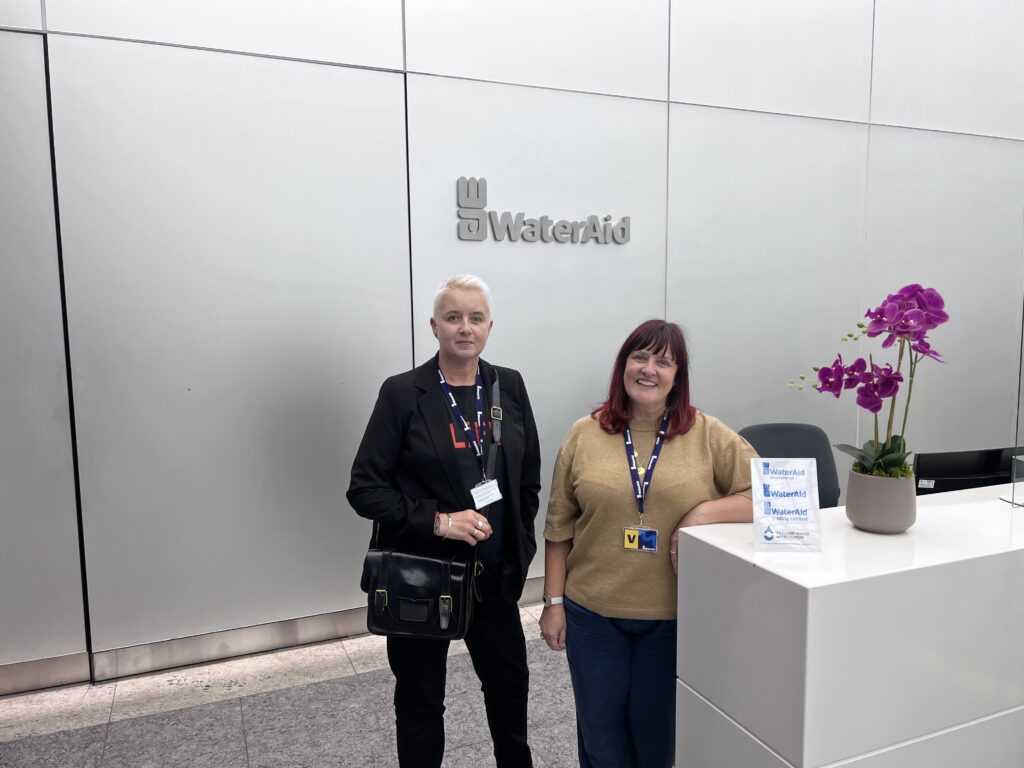
WaterAid – Management approaches for water access in rural healthcare facilities.
WaterAid – Mapping AMR national action plan content and WASH/IPC objectives.
Infection Control Africa Network (ICAN) – Role of WASH in reducing the AMR burden workshop.
Nursing Times and WHO – Best practices for effective hand hygiene using alcohol-based hand rubs, contribution to the new Guidelines for hand hygiene in community settings.
4. Research, evidence synthesis and agenda-setting
We were invited to continue to build and promote the evidence base that informs practice and policy:
Systematic review on IPC interventions in long-term care facilities for older people.
Meet the editor event on IPC, a social science perspective.
A Planetary Health Approach to IPC.
Countdown to 2030: what IPC offers the global goals.
A roadmap for AMR – the role of IPC.
Keep in clean – a crucial pathway to reducing healthcare associated infections.
5. Education, workforce development and professionalisation
We committed to invest in people, not just policy:
International Postgraduate Diploma in IPC (ICAN & Radboud University) – faculty, and ICAN Foundational IPC Course – reviewer.
ICPIC conference – expert presenters (WHO tools and approaches for IPC education and training).
Qatar Quality & Safety Week – expert presenter (global education and training indicators).
6. Humanising IPC, leadership and advocacy
We instilled the concept of advancing compassionate, ethical and people-centred IPC:
Humanising IPC – Infection Control Africa Network conference.
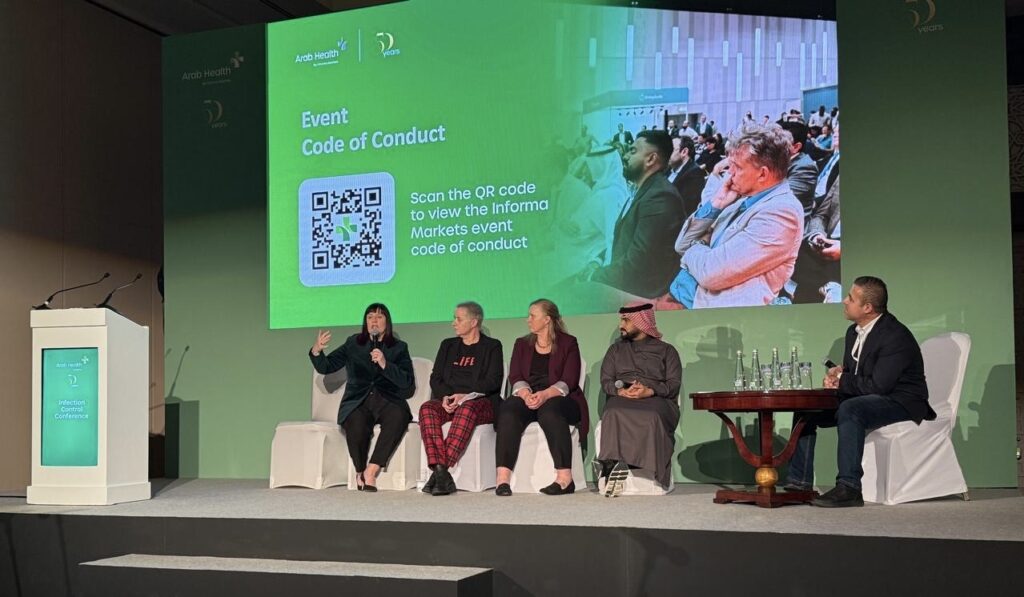
Models and theories influencing healthcare restrictions, IPC and the SDGs – Arab Health conference.
IPC and the SDGs – LSHTM HAI Interest Group.
Social media reach and impact – World Hand Hygiene Day and other global day engagement.
Invited publications (book chapters, commentaries): Compassionate care and IPC, Nurses’ leadership in IPC, AMS and vaccination, Humanitarian nursing in crisis and asylum (due in 2026).

In summary and future projections
Claire Kilpatrick and Julie Storr at S3 Global Health see their roles not as implementers-for-hire, but as values-led thought partners and bridge-builders across policy, practice and people. Our work sits confidently across global frameworks, national systems and frontline realities, informed by long-standing engagement with WHO and other global and national agencies. In 2025, much of our contribution was strategic and system-focused — the kind of work that is often invisible in the short term, but essential for lasting, meaningful change in how care is delivered.
Across diverse settings, we continued to champion a vision of IPC that is human, integrated and grounded in dignity. We challenged fragmentation, elevated overlooked voices, and argued that clean care is moral care — that safety and compassion must go hand in hand. Our blogs and thought leadership continued to articulate the values, narratives and behaviours needed to humanise IPC and strengthen its contribution to the SDGs. Evidence alone is not enough. How IPC is framed, discussed and promoted determines whether it is valued, resourced and sustained. We advocated for intentional campaigning, strategic dissemination and clearer narratives that position IPC as enabling care rather than burdening it.
Going forward:
· we commit to operating confidently across; global policy, national planning, facility-level implementation, effective communications and advocacy, and evaluation. Our long-standing involvement with WHO, global campaigns, evidence-based guidelines and training is not name-dropping — it’s woven into our reflective learning
· we believe this is a moment to reconnect — to the values, vision and systems thinking that first positioned IPC as central to patient safety and quality
· thinking of 2030, while technologies and threats will evolve, we know it is leadership, culture and values that will determine whether safe, trustworthy care becomes the norm.
This conviction will continue to shape our work as we support health systems worldwide to protect people from harm while enabling care that is compassionate and person centred. Why not contact us to find out more.