
The cargo cult of quality improvement and why infection prevention and control sometimes misses the point
By Jules Storr.
A tough problem
At this year’s Infection Prevention Society annual conference I was invited to chair a few sessions. During one of them, one of the speakers, an early career doctor stated that infection prevention and control (IPC) was difficult and expensive. I was both surprised and not surprised to hear this.
I think I once read (or perhaps heard) Charles Vincent, the patient safety leader, describe patient safety as “a tough problem”. Perhaps that’s a better way of putting it – the prevention of health care associated infection and all that it entails presents us with a tough problem. Influencing the behaviours of health workers within the complex socio-technical system of health care, such that practices are reliable, safe, and consistently applied is certainly not without its challenges.
Bridging the gap between evidence and practice – I guess that can be the tough problem. Engaging clinicians, managers, leaders and policy makers – which is what we do, could be seen as a tough problem. But we know from real world stories and the academic literature that improvement and change are possible, in a hospital, a country and across the world.
Partly, tackling this tough problem of IPC has been possible because the IPC community has likely recognised that achieving meaningful culture change and maximising the clinical and behavioural impact of interventions required looking beyond traditional technical approaches. There is now growing evidence of IPC professionals worldwide integrating insights from the social sciences into their strategies and practices.
Social science thinking
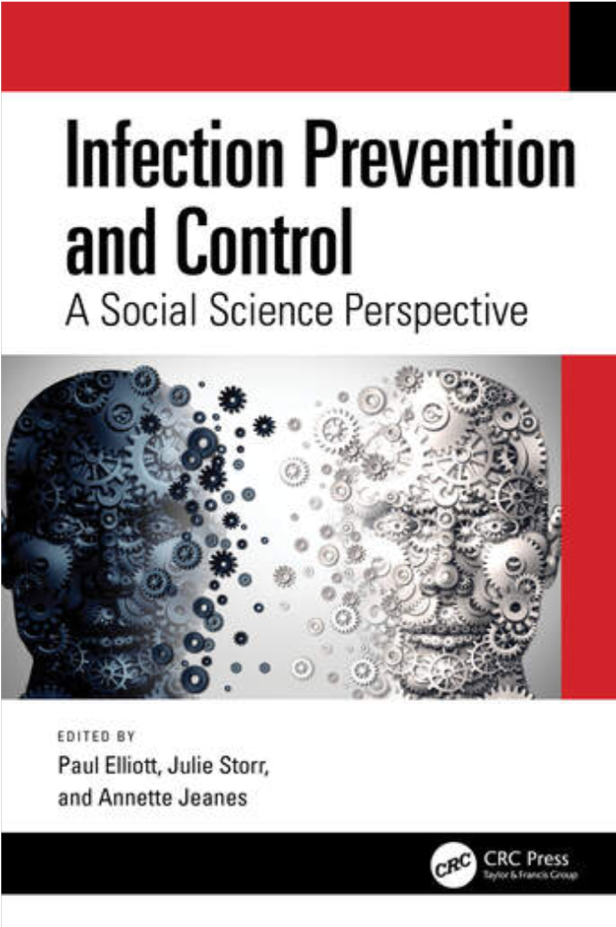
As a discipline, we have learned a lot from the social sciences, building on our core strength – our expert understanding of infections and how to stop them harming people. It has been a personal journey for me and resulted in a collaboration, with two colleagues, that resulted in a 2023 book that looked beyond the technical and towards the social, psychological and philosophical factors that influence human behavior. We considered these factors in an effort to strengthen the effectiveness of what we do in IPC. This was the ethos of the book and it was just the start.
One of the people I have learned a lot from and who inspired me to think differently about how to solve the tough problems we face in IPC is the social scientist and researcher Professor Mary Dixon Woods. Specifically, it was her paper in the Milbank Quarterly back in 2011, written together with Charles Bosk, Emily Aveling, Chris Goeschel and Peter Pronovost that got me sold on the whole social science thing. Dixon-Woods original paper is essentially about recognising the importance of understanding how and why interventions work. The paper scrutinised the work of Peter Pronovost and colleagues in Michigan and subsequent efforts to translate this to other countries and contexts.
It was a story, somewhat tucked away in the paper, that truly captured my imagination. Dixon-Woods introduced me to the idea of cargo cult science, and, by extension, the cargo cult of quality improvement. Richard Feynman famously described cargo cult science back in 1974. After the second world war, people living on the South Sea islands, where aircraft had once landed during the war bringing many desirable goods, longed for those planes to return.
“In the South seas there was a cargo cult of people. During the war they saw aeroplanes land with lots of good materials, and they want the same thing to happen now. So they’ve arranged to make things like runways, to put fires alongside the runways, to make a wooden hut for a man to sit in, with two wooden pieces on his head like headphones, and bars of bamboo sticking out like antennas – he’s the controller – and they wait for the aeroplanes to land. They’re doing everything right. The form is perfect. It looks exactly the way it looked before. But it doesn’t work. No aeroplanes land. So I call these things cargo cult science, because they follow all the apparent precepts and forms of scientific investigation, but they’re missing something essential, because the planes don’t land”.
Against this backdrop, Dixon-Woods explored why interventions that succeed in one context often fail when replicated elsewhere. Drawing on the work of implementation experts, she argues that quality improvement (QI) initiatives risk becoming cargo cults when they are implemented without a clear understanding of how and why they work. Such efforts the paper suggests, may reproduce the visible form of an intervention but not the underlying mechanisms that make it effective. Without a well-articulated program theory of change, failure in new contexts becomes almost inevitable.
Using the central line bundle experiment as a point in case, Mary Dixon-Woods and colleagues highlight the importance of understanding a program’s underlying theory of change – how context, mechanism, and outcome interact. Many QI initiatives may fail because those leading them are not grounded in social science theory and thus cannot fully explain or adapt the intervention. The paper suggests that collaboration with social scientists can provide crucial insights into what makes a program work and where it is most likely to succeed.
Moving beyond the symbols
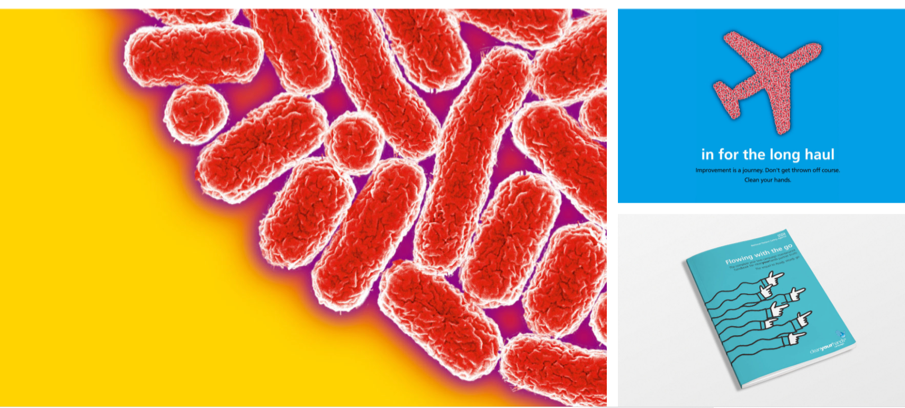
Is there something to learn from all of this work on the cargo cult of QI when thinking about other IPC interventions? Are there any parallels where IPC initiatives sometimes replicate the visible trappings that can lead to success, but fail to engage with the underlying science or culture that makes change real and sustained? I think there are some striking examples of how form can sometimes eclipse function. An obvious one is hand hygiene. Improving hand hygiene isn’t simply about putting hand sanitisers/alcohol-based hand rub at the end of every bed, nor about plastering “My 5 Moments” posters across the hospital walls. When we reduce improvement programmes to their visible symbols, we risk misleading others into thinking that replicating the surface features; a dispenser here, a poster there – is enough. Instead it’s a bit cargo cult. To make real progress, we must understand how and why a programme works in its context, and translate those principles, not just the artefacts. As an aside, I was a visitor in a hospital ward a couple of years ago in the UK and I came across a rack of leaflets – one of which was a leaflet that I developed in 2005 as part of the then national cleanyourhands campaign. I could tell immediately that this was one of those original leaflets. Twenty years old, in a rack, on a ward, in 2025, an artefact that did not seem to align with the actual hand hygiene practice of many of the health workers I interacted with.
My thoughts have also turned to hand hygiene audits – indeed it was the following observation that prompted me to put pen to paper and start to write this blog. In a recent IPC podcast, a colleague was asked which activity they would stop doing if their team lost one of its members. Their instant reply, “hand hygiene audits”, drew laughter all around. The irony is hard to miss: after decades of thoughtful work to advance hand hygiene improvement, it’s often the most superficial, and in isolation, least meaningful elements that endure as its public face. Think of the ward door proclaiming “99% compliance” on a poster, while patients’ lived experiences reveal something quite different – moments missed, opportunities lost. Is this another cargo cult phenomenon? A reassuring optic that signals action, while the deeper mechanisms that shape behaviour – feedback, resources that enable the right action, training, cues to action, the organisational culture, leadership, accountability – remain underdeveloped? If so, it’s perhaps time to move beyond the symbols.
The real work probably lies in designing health systems that genuinely support practice (human factors). In that sense, perhaps the colleague’s instinct was right – not to abandon auditing altogether, but to make it something robust, reflective, and meaningful. Done well, and in combination with the other elements that support behaviour, that might be one of the best ways to avoid cargo cult approaches in IPC.